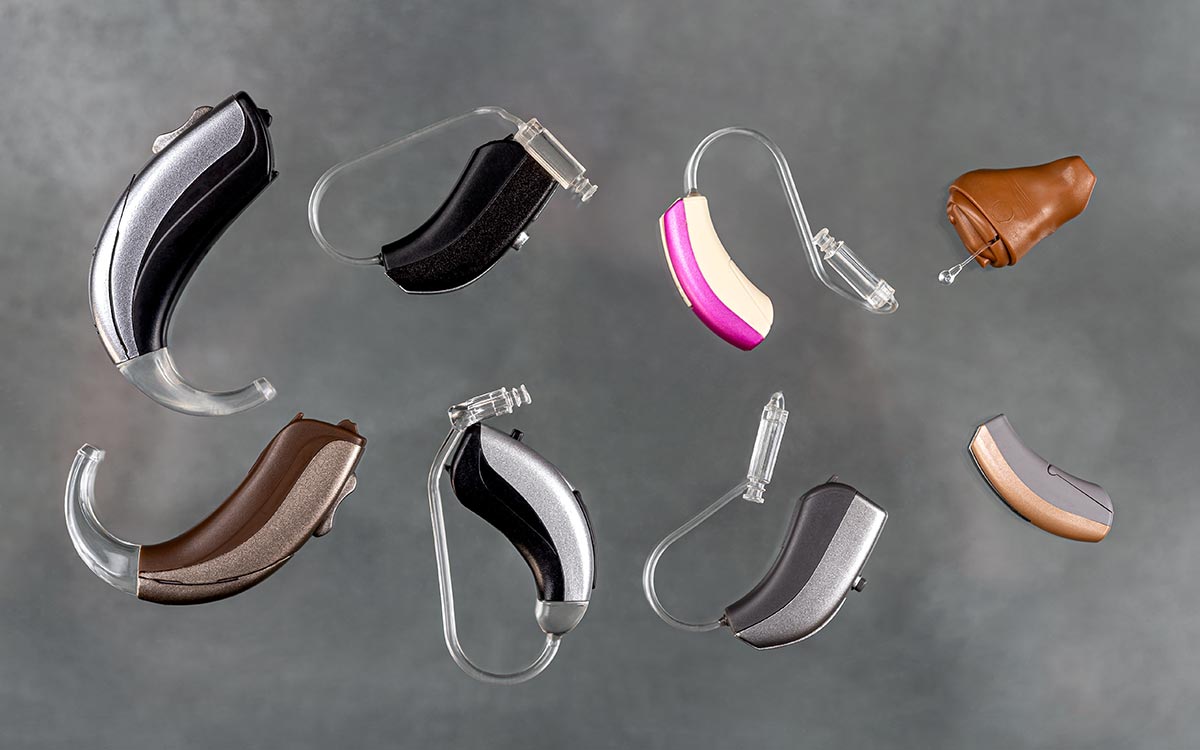
The total amount of hearing aid designs and technology levels on the market today can make the selection process feel complicated. However, an expert hearing solution exists for every person’s unique needs and daily habits. It’s all about discovering which model fits perfectly with your specific requirements.
Gaining an accurate picture of common hearing aid categories will empower you to make a wise decision for your hearing health. We are going to analyze the primary styles available today to help you understand what sets each option apart.
In-the-Canal (ITC) Hearing Aids
What they are:
ITC models are custom-fitted to sit within the ear canal, though an inconspicuous part of the shell remains visible in the ear’s outer portion.
Why users select them:
- Less apparent than standard full-size models
- Specifically contoured to the wearer’s ear for a better fit
- Designed to treat low to moderate hearing impairments
ITC devices offer an excellent balance between visibility and functionality, making them a popular choice for first-time users.
Invisible-in-Canal (IIC) Hearing Aids
What they represent:
As the most compact custom selection, IIC aids represent the smallest available style. These devices sit so far inside the ear that they are nearly impossible to see.
Why people choose them:
- Optimal cosmetic discretion
- Microphone placement assists in mimicking the ear’s natural sound collection
- A feather-light build makes them easy to wear all day
The small form factor of IIC models makes them perfect for mild hearing loss and anyone who values an invisible hearing solution.
ITE (In-the-Ear) Model Overview
The Basics:
An ITE hearing aid rests snugly within the outer ear, available in both full-shell and half-shell configurations. These are custom-fabricated for a precise fit based on your ear’s anatomy.
Value Offering:
- Larger size allows for more capabilities and longer battery life
- Ideal for individuals who find smaller devices difficult to manipulate
- Effective for an extensive range of hearing impairments, ranging from mild to severe
Users regularly choose these models for their straightforward, single-piece construction that avoids any external wiring or tubing.
Traditional BTE Units
Description:
Positioned securely on the back of the ear, BTE models sit on the outer ridge. These models use an individualized earmold or tubing to direct sound inside.
Key Strengths:
- Known for being exceptionally adaptable and robust
- Provides a wide range of amplification suitable for nearly any user
- Offer room for advanced features and rechargeable batteries
If you require a sturdy hearing aid that is simple to operate and offers high-power output, the BTE style is ideal.
RIC (Receiver-in-Canal) Summary
Design Specs:
RIC hearing aids look similar to BTE models, but the speaker (receiver) sits inside the ear canal rather than inside the device behind the ear.
Why they are popular:
- Known for producing some of the most authentic audio in the industry
- The ultra-thin design is both light and nearly effortless to wear
- A versatile solution that works for various degrees of auditory needs
The combination of style and high-end functionality renders RIC models an ideal choice in the modern market.
Long-Term “Set and Forget” Hearing Aids
Operational Info:
An audiologist inserts these specialized hearing aids deep into the canal, where they stay for multiple weeks.
Lifestyle Advantages:
- Zero daily insertion or removal
- They are virtually hard for people to notice because of their depth
- You can move about your entire life—including sports and rest—while wearing them
Extended-wear devices are ideal for those who want an effortless approach.
Bluetooth-Enabled Hearing Aids
Tech Specs:
These are modern units equipped with wireless technology to sync with your personal electronics and televisions.
Why go wireless:
- Allows for sharp voice calls and media streamed directly to the device
- Gives you the ability to adjust your volume and programs via a smartphone app
- Provides the ultimate in ease for those who use smartphones regularly
Bluetooth features are available across many styles, including RIC, BTE, and some ITC models.
Understanding Middle-Ear Implant Systems
What they represent:
This technology requires an operative procedure to place a device that physically stimulates the bones of the middle ear.
Why patients pick them:
- Serves as an essential alternative for those who find no success with traditional amplification
- Comfortable alternative for chronic ear issues related to traditional devices
A complete consultation with an ENT professional is necessary before considering an auditory implant.
Selecting Your Ideal Hearing Option
Since each hearing aid design has unique strengths, the best choice is based on your specific hearing needs, your daily activities, and your aesthetic goals. An audiology professional is your best resource for evaluating these options and finding a match for your daily routine.
If you’re ready to explore the possibilities, schedule a hearing evaluation today. It is the most significant move you can make toward a more vibrant and confident life.
Sources:
https://www.mayoclinic.org/diseases-conditions/hearing-loss/in-depth/hearing-aids/art-
20044116
https://www.hearinglife.com/hearing-aids/types
https://www.nidcd.nih.gov/health/hearing-aids