
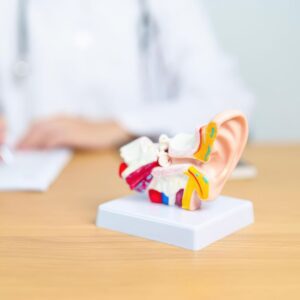
When you think about hearing, you probably picture sound entering your ears and traveling to your brain. While that process is accurate, the way we experience sound is far more complex. The shape of your outer ear plays an important role in helping your brain interpret where sounds come from and how they move through your environment.
Just as animals use their ear structures to improve sound detection, humans rely on the unique design of the outer ear—known as the pinna or auricle—to collect and organize sound information.
Although hearing ability is influenced by many factors, including genetics, aging, noise exposure, and overall ear health, research shows that the physical structure of the outer ear contributes to how accurately we locate sounds and understand our surroundings.
According to the World Health Organization (WHO), more than 1.5 billion people worldwide experience some degree of hearing loss. As hearing technology continues to advance, researchers are studying how the natural design of the ear can help improve hearing solutions and assistive devices.
The Anatomy of the Outer Ear and Its Role in Hearing
The outer ear includes the visible portion of the ear, called the auricle or pinna, along with the ear canal that directs sound toward the eardrum.
For many years, scientists believed that the outer ear mainly served as a pathway for collecting sound and directing it inward. Because the cochlea and inner ear are responsible for converting sound vibrations into electrical signals sent to the brain, the outer ear was sometimes viewed as less important for actual hearing function.
However, modern research has revealed that the outer ear does much more than simply collect sound. The folds, ridges, and curves of the pinna modify incoming sound waves in ways that provide the brain with valuable information about the location of sounds.
How Ear Shape Helps Your Brain Locate Sounds
Your brain uses several clues to determine where a sound originates. For sounds coming from the left or right, the brain compares differences in:
- The timing of when sound reaches each ear.
- The intensity of sound arriving at each ear.
- The way sound waves are altered by the outer ear.
The unique shape of the pinna is especially important for identifying whether a sound is coming from above, below, in front, or behind you.
This ability is known as sound localization, and it helps with everyday tasks such as:
- Identifying where a person is speaking in a crowded room.
- Detecting approaching vehicles.
- Locating alarms or warning signals.
- Navigating complex environments safely.
Research Reveals the Importance of the Pinna
Researchers have investigated how changes to outer ear shape affect sound perception by temporarily altering the natural contours of the pinna.
In experimental studies, participants wore custom silicone molds placed on the outer ear without blocking the ear canal. These molds changed the way sound waves interacted with the ear while leaving normal hearing sensitivity intact.
The results showed that participants could still identify whether sounds came from the left or right side, but they had much greater difficulty determining whether sounds originated above or below them.
This discovery demonstrated that the outer ear provides important spatial information that the brain uses to create a three-dimensional understanding of the sound environment.
The Brain Can Adapt to Changes in Ear Shape
One of the most fascinating findings from this research is the brain’s ability to adjust.
When participants continued wearing altered ear molds for an extended period, their brains gradually adapted to the new acoustic information. After approximately one week, many participants improved their ability to identify sound locations again.
When the molds were removed, the brain readjusted once more and returned to processing sounds using the natural shape of the ear.
This demonstrates the remarkable flexibility of the auditory system. Hearing is not simply a mechanical process—it is an ongoing interaction between the ear and the brain.
Why Ear Shape Matters for Hearing Technology
Understanding how the outer ear affects sound processing may help researchers develop better hearing technology in the future.
Modern hearing aids have already advanced significantly over the past two decades. Today’s devices use:
- Artificial intelligence-based sound processing.
- Directional microphones.
- Advanced noise reduction.
- Personalized sound settings.
- Bluetooth connectivity.
Future hearing solutions may become even more personalized by considering an individual’s unique ear anatomy and how their brain processes sound.
The Connection Between Ear Anatomy and Hearing Loss Care
While the outer ear does not determine whether someone has hearing loss, its role in sound processing provides valuable insight into how we experience the world around us.
Audiologists consider many factors when evaluating hearing health, including:
- The function of the outer, middle, and inner ear.
- Speech understanding ability.
- Noise processing skills.
- Individual listening needs and lifestyle.
As scientists continue learning more about the relationship between ear anatomy and brain function, hearing care professionals can use these discoveries to create more effective and personalized solutions.
Experience the Future of Hearing Science
Your ears are more than sound collectors—they are sophisticated systems designed to work together with your brain to help you understand and navigate the world.
If you have noticed changes in your hearing, difficulty understanding conversations, or challenges locating sounds, a professional hearing evaluation can provide valuable insight into your auditory health.
Advances in hearing science continue to improve how we diagnose, treat, and manage hearing challenges, helping more people stay connected to the sounds and conversations that matter most.
Medical Disclaimer: This content is intended for educational and informational purposes only and should not be considered medical advice. Always consult a qualified audiologist or healthcare professional for diagnosis, treatment recommendations, and personalized hearing care.