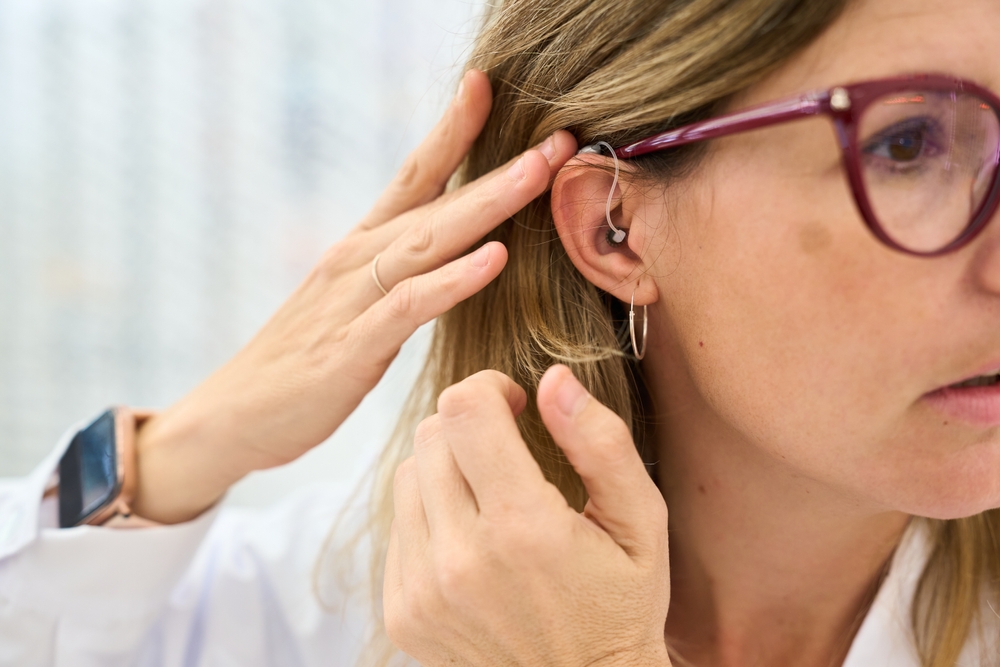
It is incredibly common for individuals to resist getting hearing instruments simply because they dread a bulky appearance or an uncomfortable fit. Such reluctance is perfectly natural when you consider past technology! In some cases, people even worried that they might be left out of conversation altogether by others who assumed they wouldn’t be able to hear or comprehend.
Because this archaic mental image endures, thousands remain deeply reluctant to schedule an initial audiometric evaluation. In reality, the sophisticated hearing instruments of the present era deliver a look and feel that shatters these old assumptions. Ongoing innovations in cosmetic engineering mean today’s options are ultra-small, seamlessly comfortable, and beautifully hidden from public view.
If cosmetic anxiety has caused you to delay treating your hearing loss, it is highly recommended that you evaluate the sophisticated options now available.
Why the Bulky, Obvious Hearing Aid Is a Thing of the Past
If you close your eyes to conceptualize a hearing system, your mind likely crafts a picture of a prominent, cumbersome unit draped behind the ear. Should that be your current expectation, you are inadvertently recalling the clunky designs common to the 1980s and 1990s.
Since that era, the manufacturing landscape for hearing solutions has completely transformed. Advances in miniaturization, design, and digital technology have completely reshaped what hearing aids look like today. The resulting devices are beautifully downsized, highly aerodynamic, and built to match lifestyle needs by remaining completely hidden.
Many of today’s devices sit fully inside the ear canal, making them virtually invisible during everyday conversation. Alternative styles occupy a tiny footprint behind the pinna, utilizing ultra-light materials and customizable color palettes to match hair or skin tones perfectly.
A Taxonomy of Modern Styles: From Totally Hidden to Ultra-Streamlined
If you’re wondering what your main options in hearing aids actually look like, here’s a simple breakdown:
Deep Canal Solutions: Invisible-in-Canal (IIC)
This tier represents the absolute pinnacle of cosmetic concealment. The IIC style fits exclusively within the deep internal canal and is built using a custom impression of the patient’s ear passagographic anatomy. When engaging with others at standard social distances, these units are utterly unnoticeable to the naked eye. They’re a popular choice for people with mild to moderate hearing loss who prioritize subtlety.
The Versatile Receiver-in-Canal (RIC) / Receiver-in-the-Ear (RITE) Style
This particular layout has become the benchmark standard for contemporary hearing health restoration. A tiny component sits behind the ear, connected by a nearly invisible wire to a small speaker in the ear canal. From an aesthetic standpoint, they look very similar to trendy consumer tech or modern bluetooth monitors. Surrounding individuals will remain completely unaware of the technology unless they actively look for it.
Behind-the-ear (BTE)
These sit fully behind the ear and are slightly larger, but they’re still far more streamlined than older versions. Frequently utilized to remediate severe-to-profound auditory loss, they maximize gain and processing capability while maintaining a highly professional, low-profile aesthetic.
The bottom line is simple: modern assistive hearing systems are crafted to serve your life quietly, not to draw attention to your ears.
Modern Hearing Aids: Looking Better and Doing a Lot More
The changes in modern hearing aids aren’t just cosmetic. Today, they function more like smart devices than traditional medical equipment. Many variants integrate high-speed Bluetooth protocols, allowing you to route phone calls, podcasts, or multimedia audio straight to your ears without external headphones.
Equipped with dedicated smartphone applications, they allow users to manipulate volume matrices or toggle environmental programs without making manual physical adjustments. For instance, when entering a highly reverberant dining space, you can suppress ambient acoustic noise and sharpen speech clarity in mere moments. Rechargeable batteries have also replaced the tiny ones people used to struggle with. You merely dock the devices on a nightstand inductive charger, exactly like replenishing your mobile phone.
Getting Over the Fear and Stigma of Hearing Devices
Even knowing all of this, it’s easy to hesitate. Acknowledging a sensory deficit and investigating rehabilitation options often forces a difficult confrontation with our own vulnerability and bodily changes. This can make us feel helpless and like we aren’t fully in control of what’s happening to our bodies.
However, an alternative, empowering framework exists: utilizing hearing technology is never an indicator of structural failure. They’re simply a sign of change, which happens to us all. Investing in your hearing shows that you are actively deploying advanced resources to support your systemic well-being and social connection.
Consider the profound joy of wearing a tiny, unnoticeable device that lets you confidently command group discussions, master noisy environments, and immerse yourself in what matters most. That level of sensory restoration is incredibly liberating!
See For Yourself What Today’s Hearing Aids Look Like
The easiest way to let go of that outdated mental image is to check out for yourself what’s available. We warmly welcome you to tour our practice, consult with our audiologists, and review our product lines with absolutely no financial or purchase obligations. Consider it a chance to see and feel how different modern hearing aids really are.
Most people leave surprised by how small, comfortable, and natural modern hearing aids have become! Do not let outdated myths delay your wellness—call our specialized practice or book your appointment online today.